Showing posts with label Reviews. Show all posts

9.11.20

The Books I Read September & October 2020

I got involved in a one-off project in September and October that kept me from updating this here blog. I enjoy keeping the blog going, and so I’m pleased to resume at least the monthly book reviews (with the monthly podcast reviews going up on my Shortman Studios blog later this week). I also have some election thoughts to share by the end of the week.

I read seven books over the last two months, and they are presented here in mostly no order, except the book I want to talk about most is last. Here goes.

1.    Larry McMurty, Lonesome Dove

I’m not usually a Western reader, and I was 5 or 6 when the acclaimed miniseries aired on TV. I may have heard this over the years, but I only read it after Christian Wallace mentioned it on Boomtown, a podcast I talked about here. Something in the way he evoked the geography of West Texas, which he said was reflected in Lonesome Dove, made me want to try the book.

Without a true western background – I probably read some stuff as a kid, including O. Henry stories – I didn’t have much in the field to compare Lonesome Dove to, so instead it really reminded me of Lord of the Rings. An epic journey with a motley, mostly male crew, moving through hardships, with bit and then key characters suffering tragedy, and a sweeping landscape behind it all. The biggest contrast is that the ambiguity here is sharper, with no character really better off than they were when the journey started, or at least without suffering meaningful damage; my memory of Lord of the Rings is a slightly more pat finish, at least for Pippin and Merry.

The story was hard to put down – I read it over vacation and kept postponing when I turned out the lights to read another chapter. McMurty wrote the characters well, and their personality comes out on the page quickly. They also react to events in realistic ways throughout, even if it can be surprising or frustrating at times. I liked it more than the miniseries – Amy and I watched it afterwards – and the length of the book gave it space to stretch out. At the same time, when I learned that there were three more books in the series and other TV productions, I had no interest in reading more. One book was enough with these characters, in this world.

The one note I have beyond that is the treatment of women and minority characters. I’m willing to extend some consideration to, say, Moby Dick for being well behind modern perspectives. Lonesome Dove was written in the 80s, and it’s ok about some things – the women are fairly round characters, even if they are confined to very few roles in the frontier society, which I can buy. I should acknowledge my own latent bias, perhaps; I thought Pea Eye was Black along with Deets, and I probably just mis-read the beginning and then lumped him in with Deets. In any case, the Mexican and Black characters were a bit of the ‘magic minority’ type or else cranks. Not a terrible job, but noticeable. I found the Native American characters to be the flattest, though a) one was the villain of the book, and b) perhaps that was coming from the perspective of the main characters, former Texas Rangers who fought the Native Americans.


2.    Samantha Schwieblin, Distancia de Rescate

Samantha Schwieblin has gotten some coverage in English-language press. Amy ordered this book – called Fever Dream in English – and I gave it a try. It’s a weird book but worth reading.

This is a horror story. Amanda, a mother from the city, is on her deathbed in a small Argentinean town, talking to David, the son of a woman she met in that town. That effect – the story is told in a conversation between the two, with Amanda trying to find the link back to where her problems started and to find out what happened to her daughter – is very disorienting, and propulsive.

It’s one of those books where I read in Spanish and feel like I missed something as far as the nuts and bolts of what happened, but not because of the language, but rather the way the book was written. I think this is one of those inscrutable books that doesn’t get wound up in the full explanation. It was good, nevertheless.

3.    Nina Simone, I Put A Spell On You (Memoir)


I’ve been thinking about Nina Simone a lot for the past few years, and read two biographies about her along with watching the Netflix documentary. I overlooked her memoir, purposefully, because I guess I had heard that it wasn’t accurate. Which is a strange reason to skip a memoir – the biographies and documentary already provide enough context, so reading the memoir isn’t about the accuracy, it’s about the feelings from the author. That’s how I overcame that initial hesitation.

The book is a weird one all the same. It is accurate, I believe, in conveying Nina’s mindset – her frustrations, her excitement, the slights she suffered, and so on. But there’s a disjointedness and a distance to the writing. She has a co-writer, Stephen Cleary, and at times perhaps that layers on the disconnect. The book also races towards its finish, more or less overlooking the 80s, which wasn’t her best decade but was the most recent as of the writing.

It’s still a firsthand story of the civil rights period, of her artistic career, of growing up in the segregated south, and it’s still Nina Simone. It’s worth the read. And I think anyone who has followed Nina Simone’s work and story before will understand that disjointed, weird feeling. It’s a part of her story, too.


4.    Dasa Drndic, Trieste

Trieste is an Italian city close to the border with Slovenia, and a stone’s throw from Croatia. I’ve never been, but the city has been in my mind for a long time. It’s one of those European cities that has traded hands and passed between empires and countries for centuries, with many overlapping identities and stories contained therein, like a Thessaloniki or an Istanbul or a Dubrovnik. Jessa Crispin wrote about it in the Dead Ladies’ Project, for example. We thought about squeezing in a trip there when we visited Venice in 2013, but it wasn’t practical. I spent a few years writing an (unpublished) novel set in Rijeka, some 75 kilometers away.

Dasa Drndic has also been on my mind for some time, though a shorter period. She is a Croatian novelist and spent much of her life in Rijeka, dying in 2017. Trieste is one of her three books which have been translated to English, and it’s a thumper. The story is about Haya Tedeschi, an old women in Gorizia, on the Italian side of the border with Slovenia. She is Jewish – the last name means ‘German’ in Italian – and she was born in between the world wars. Her father assimilated to the point where he was a fascist, and somehow from moving around – to Naples, perhaps further from the Nazis, and then to occupied Albania – the family escaped persecution. Except that when they moved back to Italy before the end of the war, she fell in love with a Nazi, had a child with him, and that child was abducted before the war ended.

It’s a fascinating book, weaving in testimonials from Holocaust victims and from Nazi trials. Drndic lists the names of 9000 or so Jews who were deported from Italy during the war. The spotlight on Trieste, not to my mind one of the principal settings of the war or the Holocaust, She weaves in Borges and Eliot quotes into the book. And this delivers heft – it’s true that the 50 pages of names aren’t meant to be read straight through, perhaps, but it adds to the punch of the book. Like when reading Angelika Schrobsdorff’s book, I’m reminded of the ease with which we adapt to the reality around us, or even more the ease with which we deny that reality, find a way to think ourselves different.

The way she ties the plot back together towards the end for some reason doesn’t move me as much, but that doesn’t reduce the impact. Reading history and historically oriented fiction is a great way to regain context for our times, and this is a good one.


5.    Jay Fingers, Orange Mound

One of the last of my Memphis-inspired book purchases for now. This is a novel about Ant, an aspiring chef who is trying to leave the drug trade behind, and all the struggles that ensue. It’s a lighter read, comic though with dark twists (including the ending), and enjoyable. The characters are well drawn, and it’s a very digestible book. Another angle on Memphis. I don’t have a lot to say about the book, but was glad to have read it.

6.    Sarah M. Broom, The Yellow House (Memoir)

I’m not sure if any book is really hyped these days, but I have been hearing about or coming across Sarah Broom’s memoir for a while. Or maybe Amazon knew to recommend it to me after I read Jesmyn Ward’s Sing the Bones. Or both. Anyway, it’s an acclaimed book and it’s set in New Orleans and so I read it.

Broom is a precise writer, and her family story – starting from her grandmother and moving through generations in New Orleans, including a generation and a half or so worth of siblings before she is born – is epic. Not because they go on to change the world, or even because the family is full of strife or drama, but because any family story on a long enough timeline and told well enough becomes epic.

The yellow house is the shotgun house she grew up in, that her parents owned (her father dying when she was six months old) in New Orleans East, an almost cordoned off part of New Orleans, on the other side of the canals from the main parts of the city. I loved her calling her block the short side of Wilson Avenue, and her adding of the history of New Orleans East as a promising development gone neglected to her own story.

As with just about any modern New Orleans story, there is a Katrina section; the book is broken into ‘Movements’, and this one is titled Water. It’s the turning point in the book, moving from her family’s past and her childhood through young adulthood to an extended continuous present tense. The family members still in New Orleans – she has 11 siblings, and six of them and her mother and ailing grandmother are in the city – flee to various corners of the south and west of the United States while she tries to connect with everyone from New York, where she lives. And that exodus proves to be permanent for all but her mother and two of her brothers, and beyond permanent for her grandmother, who dies a month after Katrina hits.

And yet, it pushes her to try to live in New Orleans again. Well, first it sends her to Burundi, a chapter I found really interesting, both because there are echoes of the life abroad I’ve led and of what I saw in Rwanda on a two-week visit, and because it was such a different experience for her in countless ways. Then it sends her to New Orleans for a first try, where she works as Mayor Ray Nagin’s speechwriter, though that doesn’t last long.

She tries again a few years later, renting out an apartment in the French Quarter, rediscovering New Orleans from the inside out, posting up in the heart of the glamorized, touristified New Orleans, the only part most people know. She talked about the frustration she faced when locals asked her where she was from, said she didn’t sound like she was from New Orleans. She talked about trying to find archival footage of her father marching in parades, the father she never knew, and how her mother corrected her when she thought she had spotted him.

There are sad moments throughout the memoir, and it’s a melancholy story overall. There is also a lot of beautiful notes on her relationships with her family, especially her older brothers Carl and Michael. I don’t have such a large family, but I can imagine that when you’re the youngest of 12, your relationships with the other 11 develop in irregular fashion, closer to some than others. I don’t know what makes me underline that, but it seems to me to exemplify the success of Broom’s writing, a success that builds momentum over the course of the book. Worth the hype, in the end.

7.    Walter Johnson, Broken Heart of America (History)

There’s a meme that went around Twitter earlier this year, about what radicalized you. Like most things, some of the comments were serious, some were surprising but cutting, and a lot were jokes.

The phrase, the idea came back to me when reading Broken Heart of America. I’ve read a decent amount of history this year; Rising Tide, Common Ground, Beale Street Dynasty; and politically infused non-fiction or fiction, like Bluest Eye or Ta-Nehisi Coates’ Between the World and Me, and even the memoirs I mentioned above. And of course there’s been a ton of writing ranging from Adam Serwer’s work to what Anna Lind-Guzik has done, and podcasts from Fiasco to Latino USA to Nice White Parents that has exposed more and more of our historical challenges to me, that has made it clear how constant those challenges have been.

Broken Heart of America takes a specific lens – St. Louis’ history – to tie together Native American removal, Black oppression, white supremacy, activism, and the struggle that emerges from that. It shows how the 1848 revolutions led to a burgeoning socialist community in St. Louis (via Germans, which is also how I imagine Milwaukee came to elect three different socialist mayors, at least in part). It shows how Abraham Lincoln was afraid to free Blacks prematurely in the Civil War. And it pulls us through to Ferguson and the police brutality and subsequent protest movement.

I found it very well written, a fluid narrative that was not impinged but aided by how well footnoted and documented it was. You could argue that Johnson writes a touch polemically, but I think he backs it up time and again. Specifically, he makes the argument that capitalism underpins much of this brutality and violence, that the logic of property ownership above all perpetuates our nation’s problems. That was the argument that was most challenging and eye-opening to me; I’ve long felt capitalism to be one of the answers to the ‘best system after you’ve tried everything else’ riddles, and I suppose I still do, but Johnson demonstrates again and again how its driving logic often reinforces or even causes some of our fundamental societal ills.  

To return to my earlier list, I’ve read a lot of great history books as well. I thought Rising Tide was fantastic, and Common Ground right behind it. Broken Heart of America is up on that tier as well, and very much worth reading.


13.9.20

Books I Read - August 2020

 I was hoping to write a little more regularly on here, but the one write-up I geared for the blog came out poorly so I need to work on it more. I'm hoping to finish the following posts before the end of the month:

  • Ibiza visit
  • Being outside the US in Summer 2020
  • North of Spain visit

But we'll see. My podcasts post will be available here tomorrow. I decided to post it directly on the work blog.

Ok, enough notes for myself and my few readers. Here's what I read in August.

1. Stuart Berman, This Book is Broken (History), 

Broken Social Scene has been a source of periodic fascination for me since I got into music and heard about the band in college. I have seen them perform three times in two different countries - Boston in 2005, a small town in Spain in 2008, New Orleans in 2011 - and got to interview them at the Spain show. I have them in my mind sort of the way William Miller has Stillwater in Almost Famous, a band half a generation older than him through which he comes to understand music more widely. I didn't have any sense of disillusionment with Broken Social Scene, but they existed on a border between bigger-than-life rock stars and dudes (alas, mostly dudes) who you could see were full of shit but enjoyed anyway. It's been a long time since I've seen them, obviously, and I'm not following them uber closely, but it was a real joy to buy their most recent record, Hug of Thunder, even if it sounded like a new spin on the same record they had made three times before.

We're in a period of 00's nostalgia, and I am contributing to that with the first (and soon to be second) season of A Positive Jam, and that second season brought me to this book. Stuart Berman was living in Toronto as Broken Social Scene emerged, and knew the band as a friend, so he has good access to the many people involved. He took on the book as an oral history, with brief introductions leading to each of the chapters.

I'm a fan, so I like the subject. I also remember in my interview with the band, a year before this came out, a couple of the members pointed out that it was way too early to publish a retrospective on the band, one that dishes on their personal secrets (someone made a joke about how you should only talk about who's sleeping with who when you're old and unattractive). And I think, despite fascination that I and probably hundreds of other people had with the band, there's not quite enough here to stand for a full book. There aren't great revelations, and any revelations would not have mattered widely enough to be worth airing. It's a step above of a fanzine, and I liked it, but it's hard to recommend if you're not into the band, and even if you are, you probably remember a lot of this (the arrest of producer Dave Newfield in New York in 2005, I forgot about that until re-reading this, but yeah, that was an event at the time). 

The question that prompts for me is whether this would have been better written, say, now, where there's that nostalgia element and some of these things are forgotten. I doubt it from a commercial element - there probably wouldn't be the wider interest in this now. From an informational and artistic perspective, it's interesting to wonder about.

(Also, I have a huge blind spot in not being Canadian or in Canada's cultural milieu. So caveat lector).

This Book is Broken: A Broken Social Scene Story: Berman, Stuart, Canning,  Brendan, Drew, Kevin: 9780887847967: Amazon.com: Books


2.    Preston Lauterbach, Beale Street Dynasty (History)

I believe this is the last of my Memphis specific books for the year. It focuses on the legendary Beale Street, but less so the music that emerged from there than the culture that allowed that music to emerge. The subject is the Church family dynasty, the Church family being Bob Church and Bob Church Jr.. They were a Black family, and their fortune was built on real estate around Beale Street, including bars, brothels, housing, and eventually a bank. The time period was the second half of the 18th century and the first third of the 20th, and the insight on what Black people had to go through in liberated, post-Civil War Memphis (and Memphis does appear to be relatively better than a lot of the country of the time). 

I expected and would have liked to hear more about the music itself, but that most likely reflects my own lack of due diligence about what this book would cover. Like a few of the other histories I’ve read this year, it felt like he had to stretch his materials to pull together a cohesive story, but this flowed reasonably well and had a thesis on which it delivered. 

Amazon.com: Beale Street Dynasty: Sex, Song, and the Struggle for the Soul  of Memphis eBook: Lauterbach, Preston: Kindle Store

3.    Robert Kanigel, Eyes on the Street (Biography)

In last month's post, I proposed a theory on biographies being either first biographies that compile all there is to know about a subject from primary sources, or second biographies that are more analytical and distant from the subject itself. 

This book, a biography of Jane Jacobs, is a pretty good exemplar of what the first biography should look like. The sourcing is good and exhaustive, including letters, interviews with family and friends, and a thorough accounting of Jacobs's life and career, especially before Death and Life of American Cities came out. The picture is a little glossy, but there may be fewer skeletons in the close for Jacobs to be criticized with. Kanigel does call out the more legitimate criticisms that Jacobs received, including her blindspots on race and class and the gentrifying effect that her preferred city policies could have.

 The writing itself felt 'hearty' to me, as if being read by an official mid-20th century broadcaster, with the mid-Atlantic neutral accent. And I think there was more room for 'ok, what does Jacobs mean now and where have her followers or critics taken city studies from her base?' but that may be appropriate for a different sort of book, rather than the stuff of biographies.

Eyes On The Street: The Life of Jane Jacobs: Amazon.es: Kanigel, Robert:  Libros en idiomas extranjeros

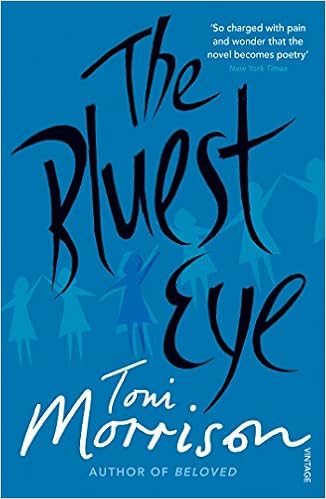
4.    Toni Morrison, The Bluest Eye (fiction)

I mentioned last time my poor effort in reading Toni Morrison's Beloved in high school. The Bluest Eye is my first effort to correct for that oversight. It's an effective story about how the weight of difficulty and history and disadvantage can crush someone’s spirits and hopes even before they become an adult. The interpolating histories of the Breedlove family members', how even the most villainous characters had a burden behind them, had context to them.

It was interesting reading the foreword/afterword where Morrison comments on how she fell short, and her comments are fair, but I think she did better at conveying her point than the foreword/afterword might lead one to believe. They were also helpful at giving a window into her craft, and how she approached the theme of the story, why she made the choices she did, and what she hoped to achieve. This felt like a first novel in the sense that it was given a narrow scope, but it wasn't the typical bildungsroman that many authors begin their career with. 

The Bluest Eye: Amazon.co.uk: Morrison, Toni: 0787721943389: Books

7.8.20

Books I Read - July 2020

July was my first month of not working at Seeking Alpha in nearly eight years, and my wife went home to the states for the summer a week into the month. So, I had a lot of reading time. Here's what I got into in July, including more on my Memphis fascination, a couple curiously set books, and an American classic.

1. Molly Caldwell Crosby, The American Plague (History)

This falls into the Memphis category. The plague is yellow fever, and Crosby begins her story with the 1878 yellow fever outbreak in Memphis, before moving to Cuba in 1900, when Walter Reed and his team proved that yellow fever spread through mosquitos, both a controversial finding and one they found in a controversial manner.

Crosby's research is very solid, and I like how many details she provides on her process in the notes at the end of the book. She is transparent about when she has to add in shades of color to flesh out the narrative, and she does a good job explaining the scientific elements of the narrative, including how researchers disagreed over yellow fever's spread and how they resolved those disagreements.

The narrative itself didn't grab me as much as I expected, perhaps due to the limited degree of detail available in the source material. Once the story gets to Cuba, it gains momentum as we fall into an epidemiological whodunit.

The applicability to 2020, whether in the scientific process and the errors made or, say, when Memphians argue over whether or not to impose a quarantine, is top of mind and obviously relevant. I didn't choose to read the book for that reason, but it provided for a mirror of sorts. It was not reassuring either for the current environment or a hypothetical new yellow fever outbreak.


Cover of The American Plague by Molly Caldwell Crosby

2.Tendai Huchu, The Maestro, The Magistrate, and The Mathematician (novel)

My wife ordered this and read it and liked it, so I was next to get it. The story is set in Edinburgh and follows the lives of three men who emigrated from Zimbabwe, and the action is in the mid to late '00s. The magistrate is a former judge who finds himself considered less qualified for work in Scotland, and also dislocated from his place in his family and community; the mathematician is a hotshot 20-something from a wealthy background and who trades commodities and stocks and drives fast cars; and the maestro is a loner who buries himself in his books, almost literally.

I liked the characters quite a bit, especially the first two I mentioned above. Both the Edinburgh setting and the look into the Zimbabwean emigre community were strengths of the book as well. Huchu could have spent more time on these characters - I would have been happy with a book just about the Magistrate, and didn't think the Maestro added much to the story. The plot was enjoyable, though the twist at the end felt a little unearned and thus not impactful. All in all a pleasant read. We both giggled at this section:

He envied the brave souls on Amazon, the dissenters hiding behind anonymous avatars, who gave War and Peace one star and told Tolstoy to go stuff it - too long, too slow, too many characters, what's with all the digressions, just get on with the story, Nikolayevich. One Casey Jones had asked if Tolstoy was taking the Mickey. Ms Jones wrote: I could not believe how many words there are in this book! It is just full of them. She felt it could have been a tenth of the size, and went on to say she had read The Count of Monte Cristo, which was a lot more readable. On a forum like that, Ms Jones was assailed by Tolstoyans, one of whom suggested she read Bridget Jones's Diary instead. But the fact remained that she was a brave nonconformist, one of the precious few.


The Maestro, the Magistrate and the Mathematician: A Novel (Modern African Writing Series) by [Tendai Huchu]

3.Kiese Laymon, Long Division (novel)

I will probably need to read this book to fully absorb it. The plot is a time travel story set in a small town in Mississippi, where Citoyen Coldson tries to rescue girls from the future and his grandfather from the past, while also sparring with his friendly rival LaVander Peeler in the "Can You Use That Word in a Sentence" competition. It's a funny book, and the echoes of injustice in Mississippi from 1964 to 1985 to 2013 are well drawn and land harder amidst all the humor.

It could be the time travel and the loops that make this a confusing book, but I had more trouble tracking the characters' motivation. I think that's mostly because most of the characters were teenagers, and teenagers' motivations change three times a day, but I also may have rushed my reading of the book. I will revisit, because I think it's worth it.


Long Division: Amazon.es: Laymon, Kiese: Libros en idiomas extranjeros

4. Holly George-Warren, A Man Called Destruction (Biography)

I have a basic theory on biographies. There are two types of biographies. First there are the first round of biographies, which come either when someone is near the end of their life - Sylvie Simmons' I'm Your Man about Leonard Cohen, e.g. - or shortly after they died, where the people who knew the subject are still around to talk about and provide context on his/her life. And then there are the biographies that are done at more of a remove, to place the subject in historical context. Both types are important, and the best biographies can bridge the gap between the two, and it's just a basic theory.

Holly George-Warren's biography on Alex Chilton is squarely in the first group, with all the good and some of the bad that can come with that. The good is that it is exhaustively reported, including interviews with almost everyone alive who knew Chilton, it seems. I'm not a Big Star junkie or anything, so this shouldn't be a surprise, but I learned a lot about both Chilton and the late 60s-80s, as well as Memphis (now you see why I read this!), and that is a credit to the work. I also thought the author did a very good job analyzing the music that Chilton produced over the years, and hit the right balance of how much to analyze the music vs. how much to tell about Chilton himself. I would have loved harder examples of how he became such a great rhythm guitarist, but that is certainly a smaller thing to point out.

The issues that come with a first round biography are reflected here. The story could have been shaped better; the author compiled so many facts but then rattled them off without a clear flow at times. For example, there were about 3-4 chapters that ended with 'this was the moment Alex realized he needed to clean himself up', but then his debauchery continued in the next chapter. I don't think the book should have been shorter, but there was a stop-start feel to his post Big Star, pre content in New Orleans days.

George-Warren knew Chilton, and her warm feelings for him slip into the story, even if she doesn't reveal her relationship with him until the epilogue. That's fine on its own, but her writing was very hands off about Chilton's numerous problems. It's a biography, not a moral stage, but among the things that went unexplored was his habit of pursuing high school girls well into his 20s, Wooderson style; his committing domestic violence; his homophobic and anti-Semitic behavior; and just his generally being kind of a dick, even when he finally cleaned up his drug and drinking habits. I know the author doesn't have to spoonfeed us, we can react our own way to Chilton's behavior, but there was something a little too clinical for my taste about how she presented his flaws.

For all that, I really enjoyed reading the book and love compelling biographies in general. Any recommended biographies that bridge those two categories I mentioned above?


          https://images-na.ssl-images-amazon.com/images/I/515JDMo4aJL._SX324_BO1,204,203,200_.jpg


5.Robert Penn Warren, All The King’s Men (novel)

I took a two-trimester seminar on the Civil War in my senior year of high school. The first trimester covered the history of the war, and the second focused on the literature that emerged from it. It was a sign that I was missing the deeper passion for the classroom at the time that, on the first day of class, one of the two teachers co-teaching the course said something like, 'when we say Civil War history, we don't mean studying the battles or being a Civil War buff or anything,' and I felt called out. It was a bigger sign when, in the literature segment, I turned in a paper titled "Beloved: A Civil War Novel". That was an assignment where our teachers 'anonymously' reviewed each student's paper in front of the whole class, to give an idea of what they were looking for, and I put anonymously in quotes because when they got to mine and pointed out how dumb it was, I burst out laughing and couldn't regain my composure for the entirety of their review. I passed, but not with flying colors, let's say.

But the class stuck with me, evidently. I haven't read any Toni Morrison since, but I have The Bluest Eye sitting behind my desk; I remember how difficult Faulkner was, and the last line of "Absalom, Absalom" - "Why do you hate the South?" "I don't! I don't hate it! I don't hate it!" - bewilders me to this day. I went to school in North Carolina and spent a month in New Orleans in my 20s and have been reading about the Delta and about the South recently and over the years.

One of the first books we read in that seminar, though I can't remember which trimester, was Robert Penn Warren's The Legacy of The Civil War. Beyond the fact of reading it, that book did not stick with me in any way. But it introduced me to Warren and to All The King's Men, which was showing up on all the best novels of the 20th century at the time. And, almost twenty years later, I got to the book.

All The King's Men is usually billed as the story of Huey Long. Long was a populist Louisiana politician who rose to the Governor's office and then to the U.S. Senate. His policy views were left wing - he was a critic of FDR from the left - but his politics were a very 'ends justify the means' approach, and some call him an example of a 30's dictator in the U.S., ruling Louisiana via patronage and political muscle. Warren is on the record as protesting this comparison, but I read that as a protest along the lines of 'don't literally interpret every plot twist as derived from Long's life, and don't presume my views and the narrator's align, or anything else.' It's hard to track the rise of Willie Stark, the stand-in for Long, and not think of the real thing.

That said, I don't think the story of Willie Stark/Huey Long is the core of the book. Or maybe, Stark's rise/fall is the engine that keeps the book going, but it's not the key narrative. Politics are like the weather, elemental and eternal, but out of a normal person's control to a large degree. Instead, we can react to politics, prepare for politics, make choices with politics around us, and we can either do honor to ourselves or not.

All The King's Men is set in the '20s and '30s in Louisiana, and I would argue it's the story of Jack Burden more than Willie Stark. Burden is a journalist from an upper-class family who becomes Stark's right-hand man, his get things done type - digging up dirt on rivals, persuading people to go along with 'the Boss', as he and most people call Stark, and so on. Burden is a compelling character, though full of flaws - he's a racist, if milder than some of the other characters, and black people are relegated to the sides of the stage throughout, dismissed and held in vague contempt (with the n word showing up on page 1); he's a misogynist, not able to accord women their fullness of motivation and character, even down to his mother and the woman he loves. Those are perhaps legacies of the time, but more specific to him is that he is aimless, a spoiled romantic who, having lost his hopes in this world is not interested in taking the reins on anything, which leaves him flirting with nihilism and ok with the 'ends justify the means' approach the Boss espouses. His facing up to what is goodness, what is his role and agency in the world, and how should he use his time and privilege (he's a man who never really needs to work, since his mother has money to share at most points in the book), is the true conflict of the book. Stark's end is foreseeable if you read up on the history, but also more of a typical tragic arc, hubris and reaching for the stars and doing all he could because his time was short and so on.

Into that mix, Warren introduces a number of entertaining or paragon-esque side characters. There's Sadie Burke, the secretary/fixer who believes she's the one who pulled all the strings to get the Boss into the governor's mansion, with a chip on her shoulder from having a smallpox scarred face; Tiny Duffy, a large political crony who becomes Lieutenant Governor because the Boss thinks he can handle him best at close range; Adam Stanton, the noble leading doctor leaving in a relative hovel, who bangs away at the piano to relieve his moral stress; and Sugar Boy, the Boss's driver who is slow to form a word but quick with a gun and lightning fast with a car. That's just a sampling, and they're all worth considering for how they react to Stark, how they exist in a world where he is the dominating, oxygen inhaling force. The tension between Stark and Stanton, for example, the closest to polar opposites that this book offers, at least in one axis, throws down the moral gauntlet for us all, while making clear we'll all stumble one way or another.

The book called to mind two main touchpoints for me - Citizen Kane, which came out a few years before All The King's Men, and which similarly follows an ambitious quasi-tyrant in his rise to fame and power and then his downfall. In this case, the longing for the rosebud, for the moment when everything went awry, is for Jack Burden to feel, and he has a more complex relationship with the past and with Anne Stanton, Adam's sister (both of them children of a famed governor who embodied high-minded uncaring towards the people that Stark stood in, well, stark contrast to), his dreamed of paramour turned confidant.

The book is also of a scope with the great Russian novels, and hits positively Dostoevskian notes. For example, when Stark is closing the agreement for Adam Stanton to head his new hospital, Stark's dreamed of pure end to all his wrangling about:

"Yeah, one more thing. But look here, Doc - you know Hugh Miller?"

"Yes," Adam said, "yes, I know him."

"Well, he was in with me - yeah, Attorney General - and he resigned. And you know why?" But he went on without waiting for the answer. "He resigned because he wanted to keep his little hands clean. He wanted the bricks but he just didn't know somebody has to paddle in the mud to make 'em. He was like somebody that just loves beefsteak but just can't bear to go to a slaughter pen because there are some bad, rough men down there who aren't animal lovers and who ought to be reported to the S.P.C.A. Well, he resigned."

I watched Adam's face. It was white and stony, as though carved out of some slick stone. He was like a man braced to hear what the jury foreman was going to say. Or what the doctor was going to say. Adam must have seen a lot of faces like that in his time. He must have had to look into them and tell them what he had to tell.

"Yeah," the Boss said, "he resigned. He was one of those guys wants everything and wants everything two ways at once. You know the kind, Doc?"

He flicked a look over at Adam, like a man flicking a fly over by the willows in the trout stream. But there wasn't any strike.

"Yeah, old Hugh - he never learned that you can't have everything. That you can have mighty little. And you never have anything you don't make. Just because he inherited a little money and the name Miller he thought you could have everything. Yeah, and he wanted the one last damned thing you can't inherit. And you know what it is?" He stared at Adam's face.

"What?" Adam said, after a long pause.

"Goodness. Yeah, just plain, simple goodness. Well you can't inherit that from anybody. You got to make it, Doc. If you want it. And you got to make it out of badness. Badness. And you know why, Doc?" He raised his bulk up in the broken-down wreck of an overstuffed chair he was in, and leaned forward, his hands on his knees, his elbows cocked out, his head out-thrust and the hair coming down to his eyes, and stared into Adam's face. "Out of badness," he repeated. "And you know why? Because there isn't anything else to make it out of." Then sinking back into the wreck, he asked softly, "Did you know that, Doc?"

Adam didn't say a word.

It could be Kirillov or Shatov ranting in Demons, or even Stavrogin at the monastery. Well, except for a couple things. First, Warren writes with the quintessential American self-centeredness, not for the author himself but for the characters. This hero plunging into the muck sensation is our country's biggest addition to the world canon, perhaps epitomized here by Jack Burden's sudden trip to Long Beach, California, when his personal and professional lives cross in just the wrong way.

And related to that, Warren writes the hell out of this story. At times it verges on too much, on a degree of detail that you imagine has died in our century, where it feels like he's not quite showing off but like Tolstoy above, a little too slow. It feels to me a little like Grapes of Wrath, where Steinbeck alternated plot chapters with descriptive setting chapters, except Warren writes in 10 long chapters so the pages and formats meld together. But it's also beautiful writing, and I'd rather he write it full than miss out on these moments. You can get a taste of it in the above, the simile about flyfishing for trout.

I'm hardly the first to draw a connection between Russian writing and Southern US writing. A class I could have taken freshman year but did not talked about the parallels between either the Soviet Union and the south or the Soviet Union and the African-American south, or maybe just between the stereotype of the babushka and of the mammy, and I would love to learn where that class was going. I do know Carson McCullers loved the Russian novelists and had a bit of Chekhov to her approach. Writing all this, my grasp on American literature feels incomplete, my analytical ability rusty.

But reading a book like this re-sparks that desire and passion.


All the King's Men | Landmark Booksellers

16.7.20

Books I Read - June 2020


I'm restarting the blog in earnest with a monthly review of the books I've read. I've been keeping lists of the books I've read since my last years in college, with the loose goal of reading 50 books a year (it's been a long time since I've hit that mark). Recently, I've added at least a sentence or two about the book to my list, so that an impression lingers longer. This monthly post is, for now anyway, a way to expand that and to try to make connections or just share what I'm looking at. So, here goes - I read the following three books in June.


1.      Daphne Brooks, Grace (Non-Fiction)


This is the first 33 1/3 book I've read in a while. The 33 1/3 series contains almost 200 books on music albums of all different sorts. The books are chapbooks, usually ~140 pages in length. I've read maybe 15-20 in total, and it's very tempting to just buy the whole series and go through them. The length of a given entry is short enough to devour in a day or two, and long enough to get to some interesting places. Usually, those places fall short of profundity because 140 pages on one album isn't that long, after all, but they are great all the same.

I think Daphne Brooks's book on Jeff Buckley's Grace jumped to the top of my list because of something she said about Nina Simone, possibly in this Pitchfork piece but maybe elsewhere. I can't remember what it was, and it may just have been her describing how impressed she was by Buckley's performance of Simone's "Lilac Wine", which is track 4 on Grace. I have it in my head, apocryphally perhaps, that she was impressed that a white man could handle Simone's work so deeply. I like and own Grace on vinyl, but given my recent thinking on Simone, that would have caught my eye.

Brooks is a professor and her approach in this book reflects that. She underlines a lot of themes, and then underlines them again - Buckley's feminism, his learning from Nusrat Fateh Ali Khan, his inversion of Led Zeppelin's power. Her breakdown of the music was a little modifier heavy, but it sheds new light on the structures of the songs and on the path Buckley took to get to Grace.

Writing or talking about music is tricky. It can be done - there are ways to draw out the power of music, even if much of that power is elemental or indescribable. The more common way is by illustrating the musician, talking about who they are to translate that to their music. The more challenging but, I think, rewarding way is to get into the notes and lines of a song, of an album. To explain why people like the popular parts, and to highlight the less noticed parts that make a song work.

Brooks takes both paths here. I think she handles the background on Buckley better by not reducing everything to biography - I learned about his (non-)relationship with his father, about his views on the world, and the conscious way he approached the beginning of his career in New York, but this was not obsessive about his person, even as it was well-researched. The analysis of the songs ranges wider, though it still doubles back on some of those themes I mentioned above, but I learned quite a bit from her analysis there as well. I wouldn't have thought about Dream Brother as having a raga feel to it, for example. And she gets full credit for devoting relatively few pages to "Hallelujah", the best known track on the album (and when this was published, it was really in pop culture ascendancy).

All in all, I think the goal of the 33 1/3 series, at least for me as a reader, is to learn more about the subject and to get excited about listening to the album a few times. This achieved that goal.

Jeff Buckley's Grace (33 1/3 Book 23) (English Edition) eBook: Brooks,  Daphne A.: Amazon.es: Tienda Kindle


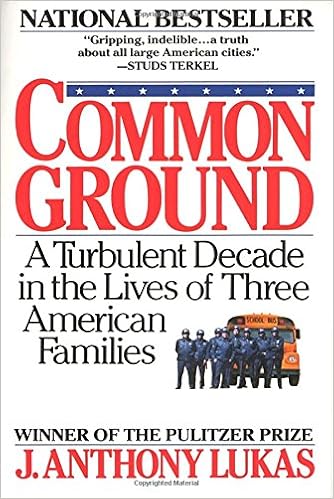
2.      J. Anthony Lucas, Common Ground (History)

2020 has been a time for grappling with our privileges, for better or worse. I think about my time studying history in high school and college. I majored in history in college, but had 1/10 of my credits earned from high school, which also fulfilled all the US history I had to study - I took two medieval Europe courses but zero college US History courses.

That credit carried over from AP US History, which I took my junior year in high school. I always loved learning about history, but somehow I was less than a serious student. Junior year required the grand research paper, which had to be at least six pages (I think I got a shorter requirement because I took a final exam as well). Showing no real curiosity, I wrote about Title IX enforcement since that was relevant to me as a wrestler. Dr. Quattlebaum rightly gave me a D on the paper, calling it a polemic (a word I learned then and there) and a C that term; when I checked if he would be open to writing me a college recommendation, he said it's a good idea sometimes to get a fuller picture on a student, even the classes that don't go well. I did not end up asking him for a recommendation.

I grew up in a suburb of Boston, and was proud of the Boston history I knew - the city's role in the American Revolution, the number of presidents born there, the importance of our universities, even the fact that Martin Luther King, Jr. attended Boston University. And yet, despite growing up in the 90s and 00s, some 25-30 years after the events depicted in Common Ground, I had no real knowledge about the busing crisis in Boston. It was something in the air, maybe the Boston Globe would mention it time to time, maybe a knucklehead WEEI radio host would get in trouble for a related issue. But it was just a thing in the recent  past of a place I wasn't curious about, and that I had the privilege to ignore.

All of which is to say, Common Ground has a lot to teach me. The writing itself is cinematic, getting into the lives and heads of the three focus families, as well as seven key figures in Boston in the 70s. That approach - based on years of reporting with the families - allows for empathy in a situation that at least sounds as polarizing as our modern times. It's not a voice from nowhere, but a voices from specific places - the South End, Charlestown, Dorchester, Lexington, etc. - and while I might guess where Lukas's sympathies lie, it's only a guess.

If one were to lazily assume based on the first chapters, the 'villain' of the book might be the working-class Irish McGoffs, who are resisting the integration of Charlestown and standing in the way of equality and progress; while the yuppie Yankee* Divers are putting their money where their mouth is, moving into an integrated neighborhood and working for inequality. The Twymons, the Black family studied in this book, would then be typecast in the victim role, held back from getting ahead.

*Lukas uses Yankee as a term for patrician, old-money Bostonians and folks in the suburb, with general English descent. I didn't really hear that term as a kid, and I'm unclear if it's just a synonym for upper-class WASP (white anglo-saxon protestant) or something else.

But that's not at all where Lukas goes, in part because he doesn't go anywhere, he lets the characters walk through their own stories. Which takes the Divers out of government work and to the point of hitting muggers with baseball bats on the South End streets, before they move back to the suburbs; the McGoffs to tentative acceptance and understanding; the Twymons holding on to their apartment and in a semi-reconciled family situation, even as a lot of tragedy took place. It was hard for me as a reader to not groan or cheer when different characters took the right or wrong step, and in the end more steps ended up being wrong than right, which reflected the twisted and stacked situation.

There are direct echoes to our modern times, for example over the role of objectivity in the press. Of course the book also fits in with the issues of racial injustice, and is a potent testament of how deep those issues go and how wide they stretch - from housing to education to economic opportunity to health to justice and further.

I did have one complaint in reading - the seesawing chronology made the narrative hard to follow, e.g. Colin Diver would leave the mayor's office, then we'd go back to a scene in 1970 with the Divers when he was still there. But it's a trivial complaint within the broader context.

I've been on a US city history kick, with certain cities specifically catching my attention - Detroit for a while, Chicago, New Orleans, and most recently Memphis (I'll throw in the Mississippi Delta from John M Barry's Rising Tide to this kick as well). It's odd that I didn't have the same desire to dive into Boston history, and came upon this sort of sideways. But it's a reminder that there are always problems close to home to solve.

Common Ground: A Turbulent Decade in the Lives of Three American Families:  Amazon.es: Lukas, J. Anthony: Libros en idiomas extranjeros

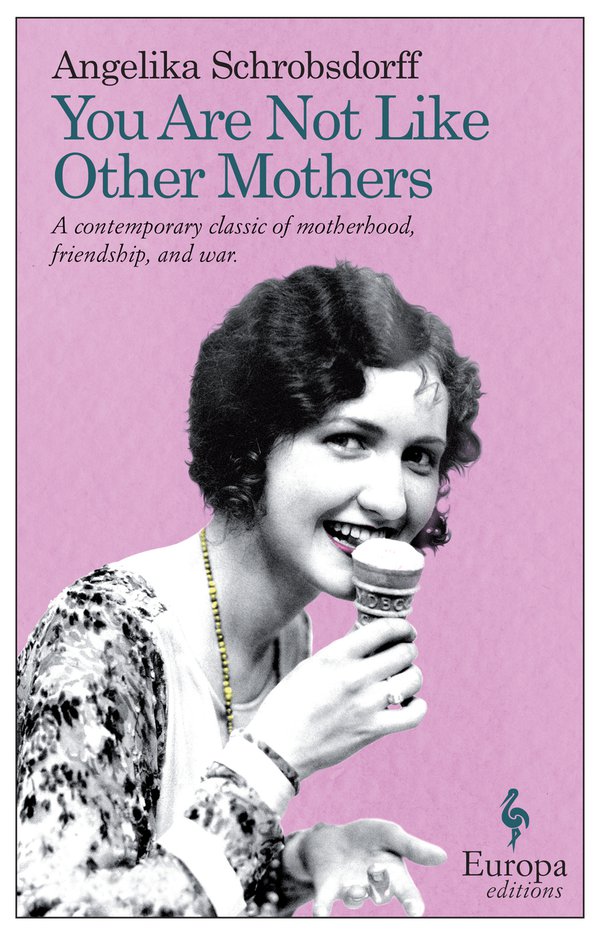
3.      Angelika Schrobsdorff, You Are Not Like Other Mothers


Europa Editions has been a source of good European books - usually translated novels - for me since college. I remember reading Elena Ferrante's Days of Abandonment in 2005, which was a total eye opener in a number of ways. Ferrante has become a big star, of course, and the publishing house has also put out authors like Muriel Barbery (The Elegance of The Hedgehog), Alina Bronsky (The Hottest Dishes Of The Tartar Cuisine), and Yishai Sarid (Limassol), among the authors I've read.

This book was recommended to us by a friend who lives in Sofia, Bulgaria, where the last section of this story takes place. The internet and print sources are ambiguous on whether this is a novel or a memoir, so I'm taking it as an exaggerated retelling of the truth, in the sense that Schrobsdorff uses novelistic techniques like writing from her mother's perspective, but most of what happened really did.

Anyway, this is a World War II, rise of the Nazis and escape from them memoir, and it's a tale of the limits of assimilation, of the Weimar Republic and the Roaring twenties in Berlin, of ignoring the rising reality of Hitler, of promiscuity and loyalty, of the pressures of wealth on normal relationships and of the greater pressures of losing wealth on those relationships, on how much of the sticks Sofia was like in the 40s, of an unsympathetic self-portrayal of the narrator, and really about history. The book races the rough the history, it's hard to put down and easy to breeze past, but like the great works of this style, it compresses life into some hundreds of pages (500 plus in this case), in a way that makes you feel like you've lived it all, the regrets and the rushes, and that now that it's over you're sorry and wish you could do it all again. Better to feel that regret and yen 'artificially', where we have a chance to then re-seize our day to day.

The book, as any honest one from people who lived through those events, asks important questions about the balance of freedom versus responsibility, and of how to recognize aberrations when we're seeking normalcy in our day to day lives. It is more a book about the run-up to the war than how to survive during that period, and really it's more about the mother who is the subject of the story, Else, and of Else's loving but fraught relationships with her children and, to a lesser degree, her men. Those sorts of stories, focused on characters amidst the times, are what resonate best with me.

Again, I have a trivial nitpick, which is that outside of Else and the narrator, Angelika, the characters were a little pale. But there was plenty to cover with just those two characters.

You Are Not Like Other Mothers - Angelika Schrobsdorff